Vou por isso votar que lhe dêmos o emprego ao qual se candidata.
Adriana Kaplan, an Anthropologist at the Universitat Autònoma de Barcelona, has achieved a commitment from the Minister of Health and the Vice President of the Republic of The Gambia to draw up a joint plan to prevent female genital mutilation in the country. The move comes after a proposal was drawn up for an alternative ritual procedure that enables female circumcision to be avoided. The proposal was made while maintaining respect and sensitivity towards Gambian culture.
The Universitat Autonoma de Barcelona anthropologist and researcher for the “Ramón y Cajal” scientific programme Adriana Kaplan has achieved a commitment from the Minister of Health and the Vice President of the Republic of The Gambia to draw up a joint plan to prevent female genital mutilation. The move comes following several years of work in the country and the drawing up of a proposal for an alternative ritual procedure that enables female circumcision to be avoided. The proposal was made while maintaining respect and sensitivity towards Gambian culture.
Ten years ago the Government of the Republic of The Gambia made it illegal to carry out any kind of awareness campaigns about the different types of female circumcisions that take place as part of initiation rites for young girls in the country. The stance taken was in response to the aggressiveness used by some NGOs fighting against the practice, which tried to impose their position and were quick to accuse those carrying it out without taking into account the reasons why they did it or the context in which it took place.
Since 1989, Adriana Kaplan, a professor for the Department of Social and Cultural Anthropology at the Universitat Autònoma de Barcelona, has maintained cooperative relations with the Gambian government, especially with the Ministry of Health and the Women’s Bureau, which comes under the President’s Office, as well as with various United Nations agencies and NGOs. Her aim has been to tackle the problem of female genital mutilation from a more respectful and realistic position. One of the main priorities for the researcher has been the problem of girls of Gambian descent born in Spain that travel to The Gambia on holiday and are stigmatised and caught up in a situation that is illegal in Spain: their parents are put in prison and the young girls come under the charge of social services in Spain. As Dr Kaplan affirms, the girls are “victims of tradition and the law”.
Dr Kaplan filmed a documentary called “Initiation without mutilation” with the support of the producers Ovideo TV. The documentary takes an anthropological look at the problem, highlighting the fact that female circumcision is a ritual marking a girl’s coming of age, analysing the different phases of circumcision and suggesting an alternative procedure that maintains the ritual’s meanings of cultural transmission and social belonging without the need for the physical mutilation of the girl.
After seeing the documentary the Vice President of The Gambia, Isatou Njie-Saidy, and the Secretary of State for Health, Yankuba Kassama, have stated in writing an historic commitment to begin to draw up a framework for the prevention of female genital mutilation in The Gambia. These mutilations include clitoridectomy (removal of the clitoral hood), excision (removal of the clitoris and labia minora) and infibulation (removal of the clitoris, the whole of the labia majora and minora and the suturing of both sides of the vulva).
Mrs Kesselman said to him through the closet door, 'Look, Mr Gumm. It's clear to us that you belive what you say. But don't you see what you're doing? Because you believe everyone's against you, you force everyone to be against you.'
Philip K. Dick ([1959] 2003) Time out of joint. Londres: Gollancz. p. 130
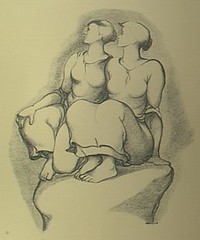
Há uns dias liguei a rádio e ouvi o fim de uma notícia: O PCP lamentava a perda de alguém de muitas convicções e ideais que muito contribuiu para a construção do regime democrático, Ministro de quatro governos provisórios, etc...Percebi então que se tratava de Vasco Gonçalves, mas o meu primeiro pensamento foi que teria morrido Álvaro Cunhal. Pensei na perda que seria TAMBÉM a morte deste senhor. E estava tão próxima, só passaram uns dias!
"Tenho visto alguns chamados protagonistas na vida nacional, que, na sua biografia, ou autobiografia, contam como eram em crianças, começam por aí, desde que nasceram. Eu não me lembro do momento em que nasci, o que senti ao chegar cá fora. Mas sei, por informações dos livros e por experiência dos outros, que chorei de certeza."
Cinco conversas com Álvaro Cunhal, Catarina Pires
Giddens is right to say that talking about the self as if it's peopled by 'mini-actors' is unhelpful an unnecessary: talking about 'moral conscience' is, for example, a straightforward substitute for 'superego'(or the 'me' and the 'generalised other').
Richard Jenkins (2004) Social Identity. Londres: Routledge. p. 44
When you deal with psychotics you're drawn in; you become mentally ill
yourself.
Philip K. Dick ([1964] 2004) The simulacra. Londres:
Gollancz. p. 46
Oh, cobarde consciência como me afliges!...
A luz despede clarões azulados!...
É a hora da meia-noite mortal!... Um suor frio encharca a minha carne trémula!...
Pois quê? Terei medo de mim próprio?...
Não há aqui mais ninguém… Ricardo ama Ricardo… É isso; eu sou eu…
Haverá aqui algum assassino?...Não… sim!... Eu?...
Fujamos, então!... O quê? De mim próprio? Valente razão!...
Porquê?... Do medo da vingança! O quê? De mim contra mim?
Ai! Eu amo-me! Por que motivo? Pelo escasso bem que a mim próprio fiz?
Oh, não! Ai de mim!... Deveria antes odiar-me pelas acções infames que cometi!
Sou um miserável! Mas minto: não é verdade… louco, fala bem de ti! Louco, não te adules!
A minha consciência tem milhares de línguas, e cada língua repete a sua história particular, e cada história me condena como miserável!
O perjúrio, o perjúrio em supremo grau!
O assassino, o assassino atroz até aos extremos da ferocidade!
Todos os diversos crimes, todos cometidos sob todas as suas formas, ocorrem para me acusar, e todos gritam: Culpado! Culpado!... Desesperarei! Não há criatura humana que me ame!
E se morrer não haverá uma alma que tenha piedade de mim!...
E porque teria? Se eu próprio não tive piedade de mim!”
(William Shakespeare, Ricardo III)
O impacto d'Os Lusíadas sobre o imaginário nacional é de tal ordem, que se torna difícil exagerá-lo, se não se compara o sentido do seu discurso com o de todos os textos anteriores que já referimos. Exprime uma espécie de euforia resultante da visão da história nacional como um conjunto cujo relato evidencia uma lógica que antes ninguém podia ter percebido. A forma poética, retórica, enfática, do discurso imprime-lhe uma força persuasiva enorme. Aqueles que se consideram membros do mesmo povo não podem deixar de se convencer que aquela é de facto a sua própria história. Assim, os receptores identificam-se eles próprios com os heróis, não como representantes do colectivo que ali desempenha as funções de principal actor. O povo, que até então fora apenas uma massa cinzenta e ignorada, cuja existência só se percebia como suporte da autoridade régia, passa para o primeiro plano das acções heróicas, independentemente de qualquer chefe. É um colectivo, e portanto um ser abstracto, mas, ao tornar-se protagonista de uma história gloriosa, adquire personalidade, isto é, uma identidade compreensível para as mentes mais simples ou mais rudes. Resta o problema de saber quantos portugueses leram o poema, nessa época e no século seguinte...
José Mattoso (2003) A Identidade Nacional. Lisboa: Gradiva.
****
The checks and balances of this system work to check us and balance them.
Philip K. Dick ([1955] 2003) Solar lottery. London: Gollancz.

...they'd move in anywhere where there were still sets standing around from big movies. And then they'd come to me and say 'Look, we've got two weeks to shoot, so we want you to write something for these sets, a 70 minute second feature, and it must have the Old Bailey, a submarine, and a mummy's tomb in it.' So I'd write it to order. And nobody believes that they made movies like this once, but it's absolutely true.

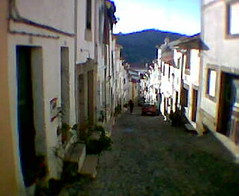
Os números 92 e 94 desta rua correspondem à casa que o senhor Atanásio nos emprestou para a passagem de ano.
The Public School, then, was right to eject a child who did not learn. Because what the child was learning was not merely facts or the basis of a money-making or even useful career. It went much deeper. The child learned that certain things in the culture around him were worth preserving at any cost. His values were fused with some objective human enterprise. And so he himself became a partof the tradition handed down to him; he maintained his heritage during his lifetime and even improved on it. He cared. True autism, Jack had decided, was in the last analysis an apathy toward public endeavor; it was a private existence carried on as if the individual person were the creator of all value, rather than merely the repository of inherited values. And Jack Bohlen, for the life of him,could not accept the Public School with its teaching machines as the sole arbiter of what was and what wasn't of value. For the values of a society were in ceaseless flux, and the Public School was an attempt to stabilize those values, to jell them at a fixed point--to embalm them.
The Public School, he had long ago decided, was neurotic. It wanted a world in which nothing new came about, in which there were no surprises. And that was the world of the compulsive-obsessive neurotic; it was not a healthy world at all.
Philip K. Dick ([1964] 2003) Martian time-slip. London: Gollancz.
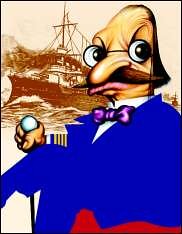
Pensando no pouco que nestes dias se tem escrito no blog, dei por mim com os olhos cravados em Salcede.
Uma coisa puxa a outra e lá me veio á memória outra personagem de Eça: O Conde d'Abranhos.
Numa pesquisa rápida dei com estas caricaturas e com uma breve descrição, que vos deixo. Um mimo!
"Abranhos satiriza o político do constitucionalismo, a sua mediocridade e o postiço que o atormenta; doutro ponto de vista, ele é sobretudo a falsificação do talento e da habilidade política."
"Se há figura que, na galeria das personagens queirosianas, ilustra a ambição política que não olha a meios para atingir os fins, essa figura é o conde d'Abranhos. Lá chegam todos, diria um poeta famoso; Alípio chegou, porque, num sistema político em que os governos rodavam ao sabor das crises ministeriais, ele soube ser o homem certo no momento certo."
A todos um Bom Natal
A todos um Bom Natal
Que seja um Bom Natal, para todos vós
No Natal pela manhã
Ouvem-se os sinos tocar
E há uma grande alegria, no ar
A todos um Bom Natal
A todos um Bom Natal
Que seja um Bom Natal, para todos vós
Nesta manhã de Natal
Há em todos os países
Muitos milhões de meninos, felizes
A todos um Bom Natal
A todos um Bom Natal
Que seja um Bom Natal, para todos vós
Vão aos saltos pela casa
Descalças ou com chinelos
Procurar suas prendas, tão belas
A todos um Bom Natal
A todos um Bom Natal
Que seja um Bom Natal, para todos vós
Depois há danças de roda
As crianças dão as mãos
No Natal todos se sentem, irmãos
A todos um Bom Natal
A todos um Bom Natal
Que seja um Bom Natal, para todos vós
Se isto fosse verdade
Para todos os Meninos
Era bom ouvir os sinos tocar.
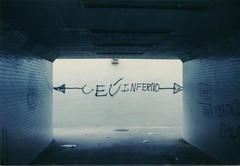
E aqui estamos no purgatorio (sem acentos para nao desconfigurar)esperando o que la vem.

Ainda sobre a importância de saber e ter opinião sobre assuntos importantes.
Hoje, 1 de Dezembro, é o dia mundial de luta contra a Sida. Vamos lá testar os nossos conhecimentos sobre esta terrível doença aqui.
Para saber mais, podemos começar por aqui.







 .
.




.jpg)